
Description
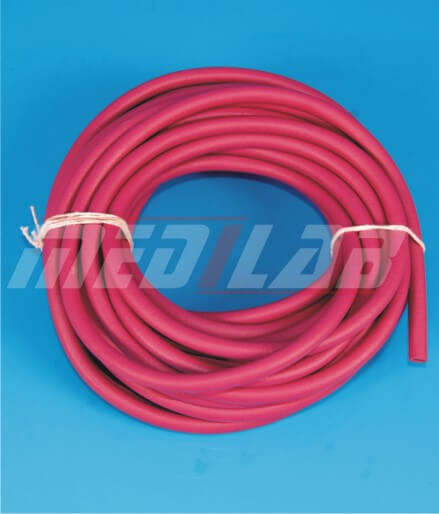
Rubber Tubing, Red, is a durable, flexible, and high-quality laboratory-grade tubing designed for fluid transfer, general lab operations, and equipment connections. Manufactured from premium natural and silicone rubber, it offers reliable performance across a range of scientific and industrial applications. Its distinctive red colour enhances visibility, simplifies colour-coding, and improves workflow accuracy in busy laboratory environments.
Key Features
- High-flexibility rubber tubing suitable for versatile laboratory and industrial use
- Excellent mechanical strength for repeated bending and handling
- Good chemical resistance depending on material grade (natural or silicone rubber)
- Smooth internal bore ensures efficient fluid flow without contamination
- Enhanced visibility due to red color—ideal for color-coded systems
- Available in multiple diameters for compatibility with laboratory instruments
- Resistant to cracking, weathering, and environmental stress
- Supplied in convenient 10-meter coils
Material Specifications
- Material: High-quality natural rubber and silicone rubber (depending on variant)
- Thermal Properties: Natural Rubber: Moderate heat resistance; Silicone Rubber: Excellent thermal stability and flexibility
- Chemical Properties: Resistant to mild chemicals and commonly used laboratory solutions
- Mechanical Properties: Strong elasticity, tear resistance, and kink resistance
- Compliance: Manufactured as per general laboratory rubberware standards (ISO/DIN guidelines where applicable)
Technical Specifications
- Available Sizes (mm): As per the standard size table
- Length: Supplied in 10-meter coils
- Dimensional Accuracy: Controlled wall thickness for consistent flow performance
- Accessories: Compatible with clamps, connectors, adapters, and general labware (not included)
Handling & Precautions
- Store in a cool, dry place away from direct sunlight to maintain elasticity
- Clean using mild detergents; avoid strong solvents that may affect rubber quality
- Natural rubber variants should not be autoclaved at high temperatures; silicone variants may withstand standard autoclave cycles
- Avoid excessive stretching, sharp edges, or abrasive surfaces
- Replace tubing periodically in critical applications to maintain performance
- Use color coding in systems to prevent cross-contamination and ensure process clarity
Applications
- General laboratory fluid transfer and siphoning
- Chemical and biological laboratories for equipment connections
- Educational and research institutions for experimental setups
- Pharmaceutical QC/QA labs for non-reactive transfer lines
- Industrial workshops for low-pressure air, gas, and liquid handling
- Food and beverage environments (depending on material grade)
- Instrument tubing, circulation lines, and color-coded distribution systems