
Description
[table id=595 /]
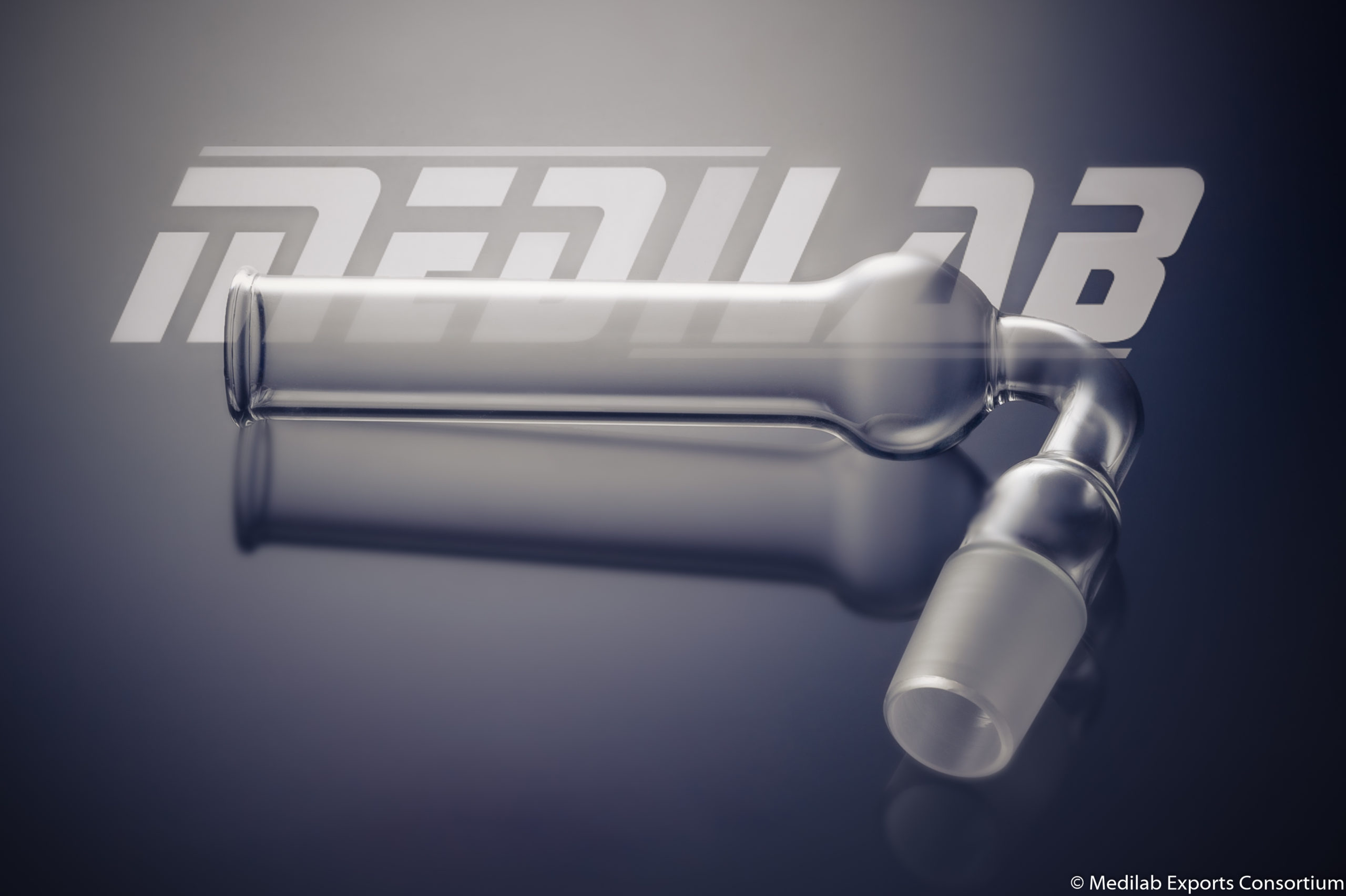
The MEDILAB Adapter, Drying Tube, is a specialised glass connector designed to protect moisture-sensitive reactions by preventing atmospheric humidity from entering a reaction vessel. It features a ground joint on one end for secure attachment to flasks or reaction setups, while the elongated tube allows filling with drying agents such as calcium chloride or silica gel. Essential for synthetic chemistry, analytical experiments, and controlled-environment reactions, this adapter ensures clean, dry conditions for accurate and reproducible results.
Key Features
- Precision-ground joint for airtight, leak-free attachment to reaction vessels.
- The extended tube design accommodates a wide range of drying agents.
- Made from premium Borosilicate Glass 3.3, ensuring exceptional thermal and chemical resistance.
- Smooth, transparent surface for clear visibility of drying media.
- Resistant to moisture, corrosion, and aggressive chemicals used in laboratory environments.
- Suitable for both vertical and angled configurations, depending on apparatus setup.
- An optional straight drying tube adapter is available upon request.
Key Features
- Precision-ground joint for airtight, leak-free attachment to reaction vessels.
- The extended tube design accommodates a wide range of drying agents.
- Made from premium Borosilicate Glass 3.3, ensuring exceptional thermal and chemical resistance.
- Smooth, transparent surface for clear visibility of drying media.
- Resistant to moisture, corrosion, and aggressive chemicals used in laboratory environments.
- Suitable for both vertical and angled configurations, depending on apparatus setup.
- An optional straight drying tube adapter is available upon request.
Technical Specifications
- Available Joint Sizes: As per the standard size table
- Design: Angled drying tube with one ground-glass joint. The straight drying tube version is also available
- Accuracy Class/Tolerance: Precision-machined joints for superior sealing and vacuum compatibility
- Calibration: Not applicable (non-volumetric accessory)
- Accessories Included: Adapter only (drying agent not included)
Handling & Precautions
- Insert and remove the adapter carefully to avoid joint damage.
- Fill the tube with appropriate drying agents as per experimental needs.
- Clean thoroughly with mild laboratory detergents; avoid abrasive materials.
- Autoclavable; ensure gradual temperature changes to prevent glass stress.
- Avoid direct flame or extreme thermal gradients.
- Inspect regularly for cracks or wear, especially before vacuum or heat applications.
- Store in padded holders or glassware racks to minimize accidental damage.
Applications
The Adapter, Drying Tube is widely used in:
- Organic synthesis laboratories
- Pharmaceutical R&D and QC/QA departments
- Chemical analysis and reaction monitoring setups
- Biotech and life science research
- Academic teaching labs and advanced chemistry courses
Common uses include:
- Protecting air-sensitive and moisture-sensitive chemical reactions
- Maintaining dry environments in reflux, distillation, and inert atmosphere setups
- Preventing humidity contamination during sample preparation or transfer
Its role is critical in ensuring clean, controlled, and moisture-free workflow conditions, contributing to higher accuracy and reproducibility of results.