
Description
[table id=817 /]
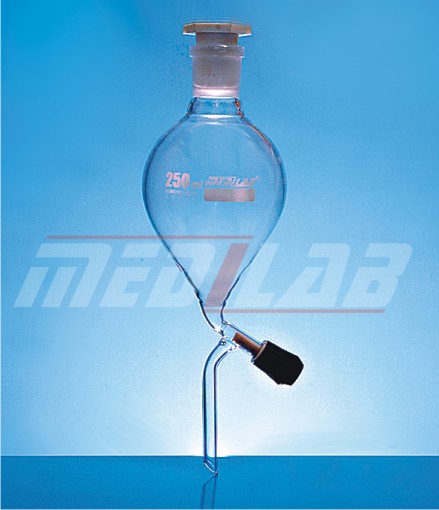
The MEDILAB Pear-Shaped Separating Funnel with Rotaflow Stopcock is a precision liquid-liquid extraction vessel designed for reliable phase separation of immiscible liquids in chemical, pharmaceutical, environmental, and academic laboratories. Its globe/pear geometry provides fast and efficient settling, while the screw-type Rotaflow stopcock ensures smooth, leak-free drainage. Engineered for durability, chemical resistance, and operational safety, this funnel is essential in workflows involving solvent extraction, purification, and analytical sample preparation.
Key Features
- Pear/Globe-Shaped Design for improved phase clarity and faster separation.
- High-Precision Rotaflow Stopcock offering controlled drainage, smooth rotation, and excellent leak resistance.
- Manufactured from Borosilicate Glass 3.3, ensuring superior thermal and chemical durability.
- Complies with ISO 4800 Standards, ensuring global laboratory compatibility.
- Supplied with a PP Stopper, lightweight, chemically inert, and easy to clean.
- Thick, Even-Wall Construction for long operational life and high mechanical strength.
- Clear, Permanent Graduations for accurate, repeatable measurements.
- Corrosion-Resistant Components suitable for a wide range of organic and aqueous solvents.
- Leak-Proof Assembly with screw-type fittings for secure operation during shaking and mixing.
Material Specifications
- Material: High-grade Borosilicate Glass 3.3 (ISO 3585 compliant)
- Thermal Properties: Low thermal expansion coefficient, excellent resistance to thermal shock Suitable for autoclaving and controlled heating
- Chemical Resistance: Highly resistant to acids, alkalis, organic solvents, and corrosive vapours. Non-porous surface prevents contamination and ensures sample integrity
- Mechanical Properties: High strength and scratch resistance. Maintains clarity and structural stability over long-term use
Technical Specifications
- Available Capacities: As per the standard size table
- Stopcock Type: Screw-type Rotaflow stopcock. Chemically resistant, smooth-action key
- Stopper: A Polypropylene (PP) stopper is included. An optional glass stopper is available on request
- Graduations: Durable, easy-to-read markings for precise volume reference
- Tolerance & Accuracy: Manufactured with controlled calibration tolerances as per international glassware standards
- Accessories Included: PP stopper, Rotaflow stopcock (assembled)
Handling & Precautions
- Safe Use: Ensure the stopper and stopcock are firmly secured before shaking. Hold the stopper during mixing to prevent accidental opening
- Cleaning: Rinse immediately after use to prevent residue buildup. Compatible with standard laboratory glassware detergents. Avoid abrasive cleaning materials
- Autoclaving / Temperature Limits: Autoclavable at standard sterilisation cycles. Remove the PP stopper before autoclaving. Avoid sudden temperature shocks to prevent stress fractures
- Dos: Lubricate the Rotaflow stopcock when required. Inspect for chips or cracks before each use. Store vertically to protect the stem
- Don’ts: Do not overtighten the screw stopcock. Do not subject the funnel to open flame or extreme heating
- Best Practices: Air-dry thoroughly before storage. Maintain regular stopcock cleaning to ensure smooth operation
Applications
- Organic Chemistry & Solvent Extraction
- Pharmaceutical and Biopharmaceutical Labs
- Environmental Analysis: Water, soil, and effluent extraction
- Quality Control / Quality Assurance Testing
- Chemical Synthesis & Purification Procedures
- Academic Laboratory Training and Demonstrations
- Biotechnology Sample Preparation
This funnel supports reliable separation of immiscible liquids, washing steps, and purification stages essential across R&D, industry, and analytical environments.