
Description
Silicone Rubber :
| Catalog No. | Size | Capacity |
| 19823/1 | Small | 5ml |
| 19823/2 | Medium | 10ml |
| 19823/3 | Large | 15ml |
| 19823/4 | Extra large | 20ml |
| 19823/5 | Oval | 25ml |
| 19823/6 | Super Large | 50ml |
| 19823/7 | Extra Super Large | 100ml |
Natural Rubber :
| Catalog No. | Size | Capacity |
| 19823/11 | Small | 5ml |
| 19823/12 | Medium | 10ml |
| 19823/13 | Large | 15ml |
| 19823/14 | Extra large | 20ml |
| 19823/15 | Oval | 25ml |
| 19823/16 | Super Large | 50ml |
| 19823/17 | Extra Super Large | 100ml |
*Small, Medium & Large available in a Pack of 100.
*Extra Large, Oval, Super Large & Extra Super Large available in a Pack of 50.
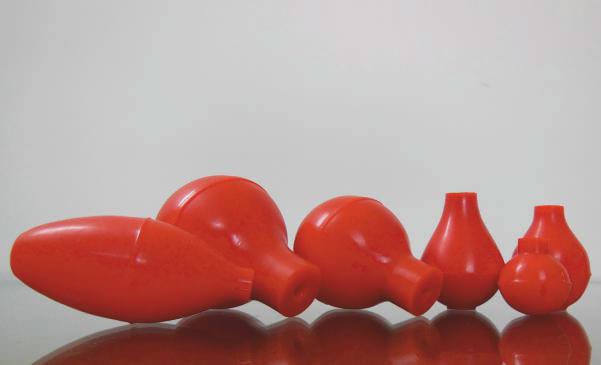
Pipette Bulbs are high-quality rubber suction devices designed for safe, controlled filling and dispensing of liquids through laboratory pipettes. They provide an efficient, hands-free alternative to mouth pipetting, ensuring user safety and preventing contamination. These bulbs are essential for accurate liquid handling in analytical, research, and industrial environments.
Key Features
- Safe, Hands-Free Operation: Eliminates the risk of mouth pipetting and exposure to hazardous or corrosive chemicals.
- High Elasticity & Grip: Ensures secure handling and consistent pressure for precise suction and dispensing.
- Chemical & Temperature Resistant: Suitable for a broad range of laboratory reagents and working conditions.
- Durable Construction: Tear-resistant and long-lasting—ideal for high-use laboratory workflows.
- Universal Fit: Compatible with most standard glass and plastic pipettes.
- Comfortable Design: Soft rubber texture for easy compression and fatigue-free use.
Material Specifications
Material Options:
- Natural Rubber: Excellent elasticity, strong grip, high mechanical strength.
- Silicone Rubber: Superior chemical resistance, high-temperature tolerance, and long service life.
Properties:
- Thermal Resistance: Silicone: Typically up to +200°C; Natural Rubber: Typically up to +70°C
- Chemical Resistance: Good resistance to water-based solutions, mild chemicals, and commonly used laboratory reagents.
- Mechanical Properties: Flexible, crack-resistant, high tear strength.
Standards Compliance:
Manufactured in accordance with accepted international laboratory consumable standards (ISO/DIN guidelines for general labware; material properties aligned with ASTM rubber specifications).
Technical Specifications
- Available Sizes: Small, Medium, Large, and Special Shapes (standard pipette compatibility).
- Capacities: Suitable for pipettes from 1 mL to 50 mL.
- Dimensions: Size-dependent (custom sizing available on request).
- Accuracy & Control: Designed for controlled suction and precise liquid release through finger pressure.
- Compatibility: Works with volumetric, serological, graduated, and Pasteur pipettes.
- Accessories: Optional pipette adapters (if required by the user).
Handling & Precautions
- Safe Use: Compress the bulb before attaching to the pipette; release gently for controlled aspiration.
- Cleaning: Wash with mild detergent and rinse with distilled water.
- Sterilisation: Silicone bulbs: Autoclavable at standard laboratory conditions. Natural rubber bulbs: Not recommended for high-temperature autoclaving; disinfect using non-aggressive chemical solutions.
- Dos: Store in a cool, dry environment. Inspect regularly for cracks or wear.
- Don’ts: Avoid exposure to concentrated solvents or oils that may degrade rubber. Do not force onto oversized pipettes.
Applications
- Research Laboratories: Routine liquid transfers, analytical experiments.
- Pharmaceutical & Biotech: Sample preparation, reagent handling, QC/QA testing.
- Chemical & Industrial Labs: Safe handling of corrosive and toxic samples.
- Academic Institutions: Standard teaching and training workflows.
- Healthcare & Diagnostic Labs: Controlled pipetting in microbiology and clinical chemistry.
Pipette bulbs play a central role in ensuring safety, accuracy, and efficiency in everyday laboratory operations—making them indispensable across scientific, educational, and industrial environments.