
In any rigorous scientific environment, Laboratory Glassware Maintenance is not merely a chore but a critical component of Quality Assurance (QA). The precision of your analytical results is only as reliable as the cleanliness and integrity of the vessels used to contain and measure your samples. Residual contaminants from previous experiments can catalyze unwanted reactions, alter pH levels, or introduce trace impurities that invalidate weeks of research.
This guide provides a comprehensive overview of Laboratory Glassware Maintenance, focusing on the best practices for cleaning, sterilizing, and storing borosilicate 3.3 glass. By following these 10 essential tips, lab managers and researchers can extend the lifespan of their equipment while ensuring the highest standards of safety and accuracy.
All laboratory glassware mentioned here, including Class A and Class B items, requires consistent Laboratory Glassware Maintenance to retain its calibrated accuracy over time. Medilab Exports Consortium provides high-quality borosilicate glassware designed to withstand the rigors of standard laboratory cleaning protocols.
The Importance of Proper Laboratory Glassware Maintenance
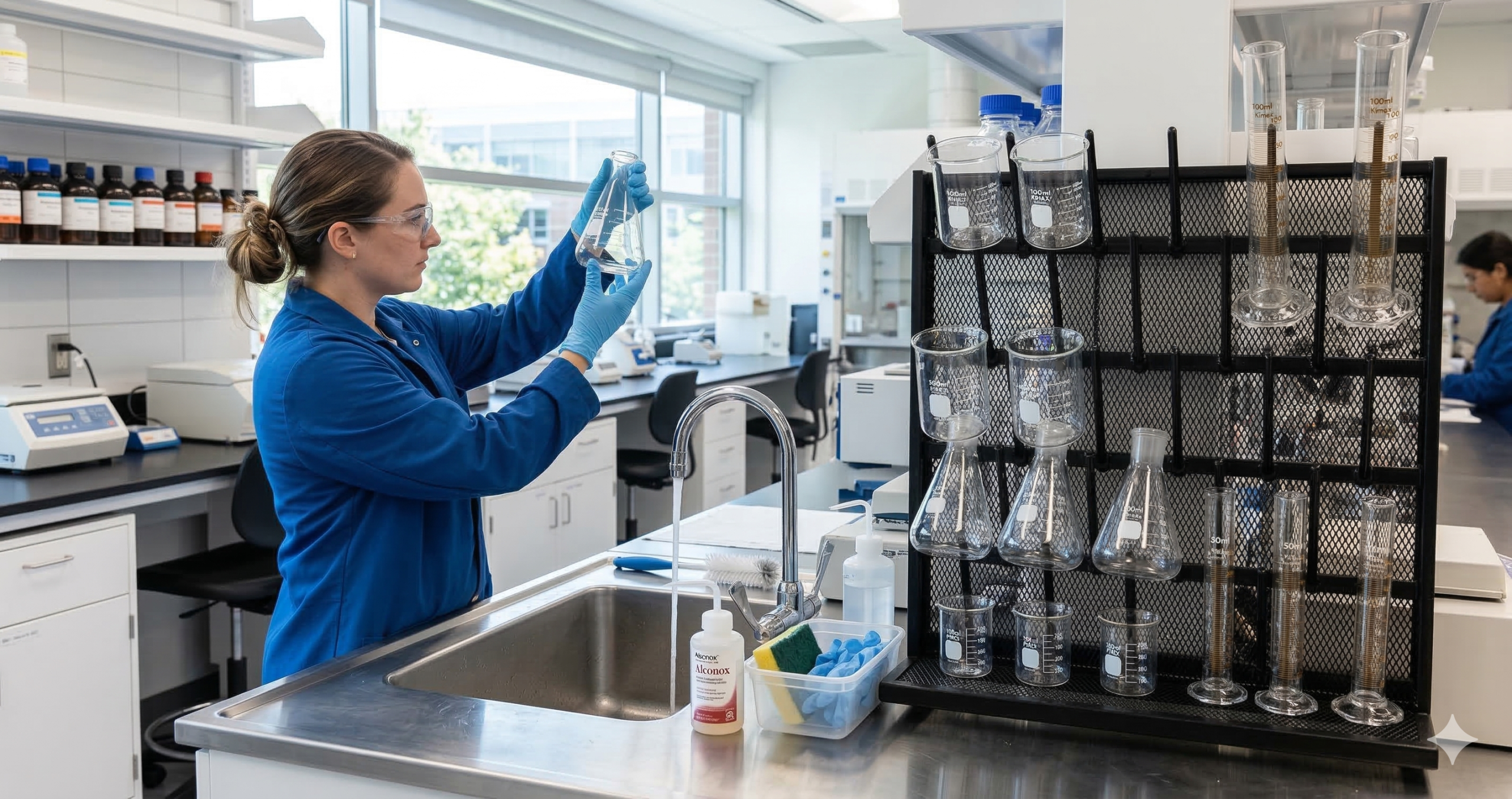
Effective Laboratory Glassware Maintenance serves two primary purposes: safety and accuracy. Chemically etched or weakened glass is prone to “stars” or stress cracks, which can lead to catastrophic failure under vacuum or pressure. Furthermore, volumetric glassware that has been improperly cleaned or heated beyond its design limits can lose its calibration, leading to systematic errors in measurement.
Whether you are working in a pharmaceutical QC lab or an educational chemistry department, establishing a robust Laboratory Glassware Maintenance program is essential. This includes standardizing cleaning agents, verifying water quality for the final rinse, and ensuring that all staff are trained in the safe handling of delicate glass instruments.
1. Immediate Cleaning After Use
The most fundamental rule of Laboratory Glassware Maintenance is to clean equipment as soon as possible after use. Allowing chemicals to dry on the glass surface can lead to the formation of stubborn deposits that are much harder to remove later. If immediate cleaning is not possible, the glassware should be submerged in a basin of water or a mild detergent solution to keep the residues in a liquid or soluble state.
Immediate rinsing is particularly critical when working with proteins, resins, or saturated solutions that tend to precipitate upon cooling or evaporation. By incorporating immediate rinsing into your Laboratory Glassware Maintenance workflow, you significantly reduce the need for aggressive chemical cleaning later, thereby preserving the surface integrity of the glass. For more on standard lab protocols, see the Princeton University Lab Safety Guide.
2. Selecting the Right Detergent for Laboratory Glassware Maintenance
Not all cleaning agents are suitable for scientific glass. For standard Laboratory Glassware Maintenance, use non-abrasive, low-foaming detergents specifically formulated for lab use. Avoid using commercial dish soaps, as they often contain perfumes, dyes, and wetting agents that can leave a microscopic film on the glass, potentially interfering with sensitive biological or analytical assays.
When selecting a detergent, consider the nature of the contaminants. For organic residues, an alkaline cleaner is often effective. For mineral deposits or scales, an acidic rinse may be necessary. Always ensure that the detergent used in your Laboratory Glassware Maintenance routine is thoroughly rinsed away to prevent the buildup of surfactant residues.
In cases where heavy grease or oils are present, specialized cleaners like Alconox or Liquinox are recommended. These are biodegradable and leave no residue when rinsed properly, making them a staple in high-level Laboratory Glassware Maintenance protocols across the industry.
3. Understanding Autoclave Safety
Sterilization is a common part of Laboratory Glassware Maintenance in microbiology and biochemistry labs. Borosilicate 3.3 glass is highly resistant to thermal shock, making it ideal for autoclaving. However, it is vital to follow CDC steam sterilization guidelines: never tighten caps or stoppers before autoclaving, as the pressure buildup can cause the vessel to explode.
During the cooling phase of Laboratory Glassware Maintenance sterilization, avoid placing hot glassware directly on a cold bench or in a draft, as extreme temperature gradients can still cause stress. Allow the autoclave to vent slowly and let the glassware reach room temperature naturally to maintain its structural integrity over hundreds of cycles.
4. Proper Rinsing Techniques
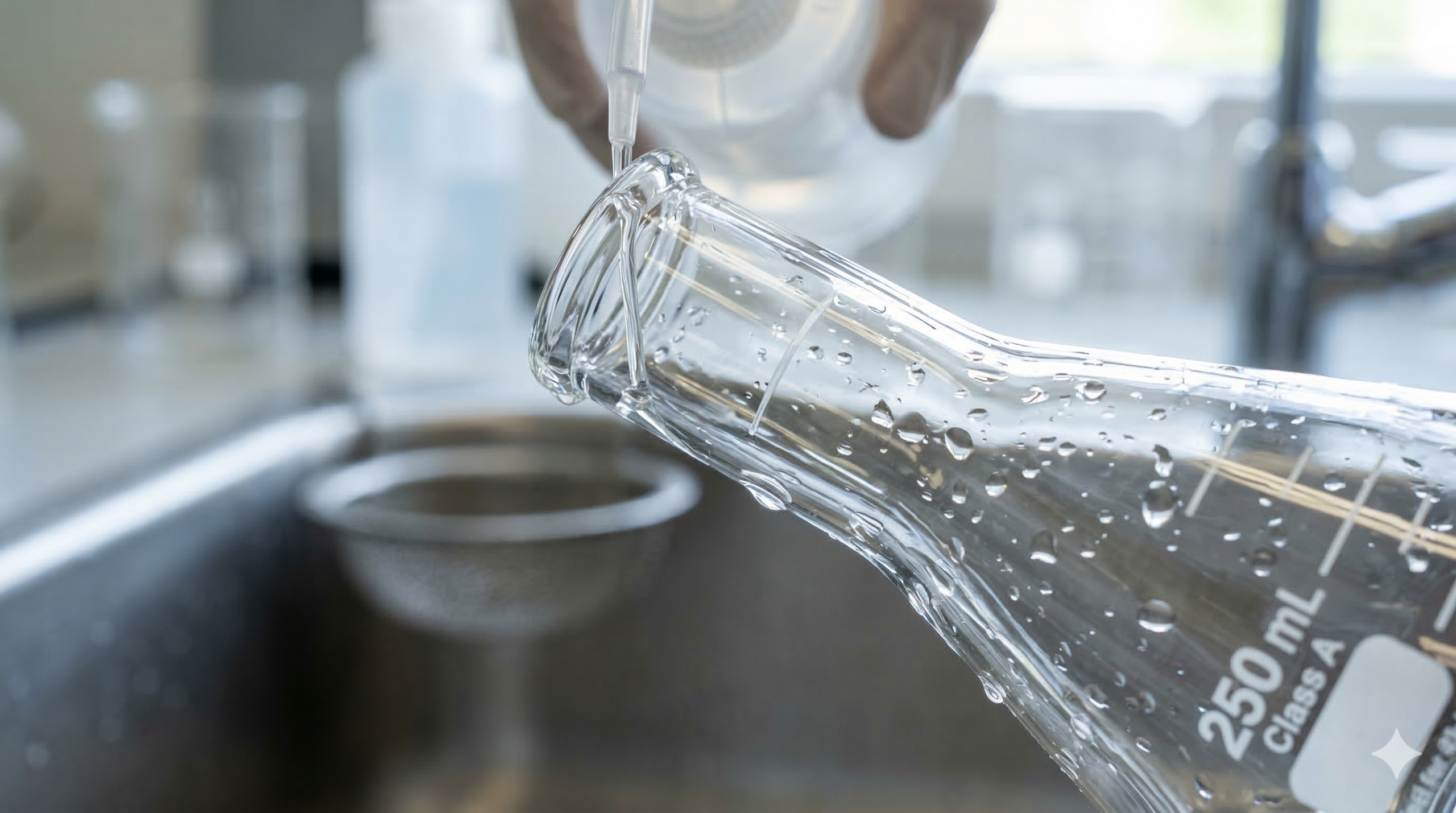
The quality of the rinse is as important as the wash itself in Laboratory Glassware Maintenance. After cleaning with detergent, glassware should be rinsed at least three times with tap water, followed by a final rinse with distilled or deionized water. This final step removes any trace minerals or ions from the tap water that could contaminate your next experiment.
For sensitive analytical work, such as trace metal analysis, some Laboratory Glassware Maintenance protocols require an additional rinse with high-purity solvents like ethanol or acetone (if compatible with the residue) to ensure a completely dry and grease-free surface. However, distilled water remains the universal standard for the final rinse in most laboratory settings.
5. Handling Ground Glass Joints
Ground glass joints (like those on round-bottom flasks and condensers) require special attention during Laboratory Glassware Maintenance. These joints are prone to “seizing” or “freezing” if chemicals are allowed to seep into the interface and dry. To prevent this, always clean the joints thoroughly before and after use.
If the joints are not being used with grease, ensure they are perfectly clean and dry. If grease is required for a vacuum seal, use only a minimal amount of high-vacuum silicone grease. A key part of Laboratory Glassware Maintenance for jointed glassware is removing all traces of grease with a solvent like hexane or petroleum ether before starting the cleaning cycle, as grease can trap contaminants that water-based detergents cannot reach.
6. Regular Inspection for Defects
Daily inspection is a non-negotiable part of Laboratory Glassware Maintenance. Before use, hold the glassware up to a light source and check for “stars,” hairline cracks, or deep scratches. Glassware used under vacuum (like desiccators or filter flasks) or heated on a flame must be in perfect condition. The American Chemical Society (ACS) Safety PDF highlights that even 0.1mm scratches can weaken glass by up to 50% under pressure.
In a professional Laboratory Glassware Maintenance schedule, any damaged item should be immediately discarded or sent to a professional glassblower for repair. Using compromised glassware is a leading cause of lab accidents; thus, diligent inspection remains your first line of defense in laboratory safety.
7. Correct Drying Procedures
Drying is the final phase of the cleaning cycle in Laboratory Glassware Maintenance. Whenever possible, allow glassware to air-dry on a rack to avoid lint contamination from towels. If you must use a drying oven, ensure the temperature does not exceed 110°C. While borosilicate glass can handle higher temperatures, the plastic components (like screw caps) or volumetric markings can be damaged by excessive heat.
For volumetric glassware like burettes and pipettes, high-temperature oven drying is generally discouraged as it can, over many cycles, cause a very slight shift in volume. Proper Laboratory Glassware Maintenance for precision items involved air-drying at room temperature or using a flow of clean, dry air or nitrogen.
8. Safe Storage Practices
Where and how you store your equipment is a vital aspect of Laboratory Glassware Maintenance. Store glassware in clean, dry cabinets away from the traffic of the main lab bench. Use dividers or padding for delicate items like condensers and burettes. Volumetric flasks should be stored with their stoppers loosely inserted or removed to prevent the “freezing” mentioned earlier.
Storing items upside down on a clean pegboard or inside a cupboard helps prevent dust from settling inside. A well-organized storage system facilitates Laboratory Glassware Maintenance by making it easier to track inventory and identify items that need cleaning or replacement.
9. Removing Stubborn Stains
Occasionally, standard detergents will fail, and more aggressive Laboratory Glassware Maintenance measures are required. For organic “coke” or carbonized residues, soaking in a mixture of potassium hydroxide and isopropyl alcohol (base bath) is highly effective. If you use this method, ensure you follow Stanford University Base Bath safety protocols, as it can slightly etch the glass surface over time.
For mineral stains like iron or lime, a soak in 10% hydrochloric acid or nitric acid is often necessary. Always wear appropriate PPE and perform these Laboratory Glassware Maintenance steps in a fume hood. Remember to rinse thoroughly with water after any acid or base soak to neutralize the glass surface.
10. Calibration Verification for Class A
For regulated laboratories, Laboratory Glassware Maintenance includes periodic calibration verification. While Class A glassware from Medilab Exports is calibrated during manufacture to ASTM E288 or ISO 1042 standards, over years of use (and potentially aggressive cleaning), the volume can shift slightly. Quantitative labs should implement a schedule to verify the mass of water contained or delivered by their most critical volumetric vessels.
This “metrological” side of Laboratory Glassware Maintenance ensures that your measurements remain traceable and accurate. If a piece of glassware fails its tolerance check, it should be removed from precision service and used only for general purpose transfers or reagent storage.
Expert Advice: A consistent Laboratory Glassware Maintenance routine is the hallmark of a professional laboratory. By prioritizing the care of your borosilicate 3.3 equipment, you ensure long-term durability and unshakeable confidence in your analytical results. Never compromise on cleaning—your data depends on it.
Detailed Summary: The 10 Steps of Laboratory Glassware Maintenance
| Step | Maintenance Task | Action Required | Key Benefit |
|---|---|---|---|
| 1 | Initial Cleaning | Rinse immediately after use | Prevents residue drying |
| 2 | Detergent Choice | Use lab-grade non-abrasive soap | Eliminates interference films |
| 3 | Sterilization | Autoclave at standard settings | Ensures biological safety |
| 4 | Final Rinse | Three tap rinses, one distilled | Removes mineral trace ions |
| 5 | Joint Care | Remove grease with solvent | Prevents joint seizing |
| 6 | Inspection | Check for stars and cracks | Critical for personal safety |
| 7 | Drying | Air-dry or oven-dry below 110°C | Reduces lint and contamination |
| 8 | Storage | In dust-free, organized cabinets | Prevents accidental breakage |
| 9 | Stain Removal | Acid or base soak for residues | Restores optical clarity |
| 10 | Calibration | Periodic gravimetric verification | Maintains analytical accuracy |
Developing a standardized 10-step Laboratory Glassware Maintenance protocol ensures that every member of the lab team, from junior technicians to senior researchers, understands the expectations for equipment care. Consistency is the key to minimizing variables in your experimental data and maximizing the return on investment for your high-quality laboratory glassware.
Furthermore, Laboratory Glassware Maintenance protocols should be regularly audited. Periodic reviews of the washing stations, detergent supplies, and the condition of the stored inventory can catch potential issues before they lead to failed experiments or safety incidents. At Medilab Exports, we believe that providing the world’s best glassware is only half the story—the other half is the dedicated Laboratory Glassware Maintenance performed by our customers every day.
In addition to the physical cleaning, Laboratory Glassware Maintenance also encompasses the documentation of your cleaning procedures. Many regulatory bodies, such as the FDA or ISO, requires labs to maintain logs of their cleaning and sterilization cycles. Proper documentation of your Laboratory Glassware Maintenance ensures that you can always go back and verify the status of the glassware used in a particular lot or batch of samples.
Consider the environment when planning your Laboratory Glassware Maintenance. Opting for biodegradable detergents and implementing water-saving rinse protocols can make your laboratory more sustainable without compromising on cleanliness. Modern Laboratory Glassware Maintenance techniques often incorporate specialized washers that optimize water and detergent usage, providing a more consistent result than manual washing alone.
When training new staff, emphasize that Laboratory Glassware Maintenance is a skill that requires attention to detail. Understanding the difference between a “water-break-free” surface and one with hidden grease films is vital for accurate volumetric work. A simple test during Laboratory Glassware Maintenance is the “beading test”—if water beads up on the glass surface instead of forming a continuous sheet, the glass is not chemically clean and requires further cleaning.
Investing in the right tools for Laboratory Glassware Maintenance is also important. Use nylon-bristle brushes that won’t scratch the glass. Scratches not only obscure markings but also provide sites for contamination to hide and for cracks to initiate. A well-stocked Laboratory Glassware Maintenance cart should have various sizes of brushes, sponges, and scrapers designed specifically for lab use.
Finally, remember that Laboratory Glassware Maintenance is an ongoing process. As new techniques and chemicals are introduced into your lab, your cleaning protocols must evolve to match them. Staying informed about the latest advances in cleaning technology and materials science will keep your Laboratory Glassware Maintenance program at the cutting edge of laboratory excellence.
For more detailed information on Laboratory Glassware Maintenance, or to enquire about our range of easy-to-clean borosilicate labware, please contact the team at Medilab Exports Consortium. Our experts are always available to help you optimize your Laboratory Glassware Maintenance procedures and select the best equipment for your specific application needs.
Effective Laboratory Glassware Maintenance also involves the proper disposal of cleaning by-products. Neutralizing acid or base baths before disposal is a key part of your lab’s safety and environmental responsibility. Always ensure your Laboratory Glassware Maintenance activities comply with local environmental regulations and your institution’s hazardous waste policies.
One often overlooked aspect of Laboratory Glassware Maintenance is the quality of the drying air. Using compressed air that contains oil or moisture can re-contaminate your freshly cleaned glassware. Using oil-free compressors or high-efficiency filters is a must for Laboratory Glassware Maintenance in high-precision analytical labs. This ensures that every piece of glassware remains in pristine condition from the moment it is cleaned until the moment it is used.
In summary, the 10 tips for Laboratory Glassware Maintenance highlighted here are your roadmap to a safer, more accurate laboratory. From the initial rinse to the final calibration check, every step in Laboratory Glassware Maintenance contributes to the overall success of your scientific endeavors. Trust in Medilab Exports for your glassware needs, and trust in your Laboratory Glassware Maintenance routine to keep them performing at their best.
As we look to the future of laboratory science, the automation of Laboratory Glassware Maintenance is becoming more common. Automated glassware washers provide a level of repeatability that is hard to match manually. However, even with automation, the principles of Laboratory Glassware Maintenance remain the same—selecting the right detergents, ensuring proper rinsing, and performing regular inspections for damage.
Whether you choose manual or automated Laboratory Glassware Maintenance, the goal is always clear: a pristine, safe, and accurate work environment. By following the tips in this guide, you are well on your way to mastering Laboratory Glassware Maintenance and ensuring the longevity of your laboratory assets. Contact us today to learn more about how Medilab Exports can support your lab’s mission through superior products and expert Laboratory Glassware Maintenance advice.
Frequently Asked Questions
Tap water contains dissolved minerals like calcium, magnesium, and sodium, as well as chlorides. If you skip the distilled water rinse during your Laboratory Glassware Maintenance, these minerals will leave a white, powdery residue or a microscopic film as the water evaporates. This contamination can alter the results of sensitive chemical reactions or biological cultures. Distilled or deionized water ensures that the glass surface is as chemically neutral as possible.
While a household oven can reach the necessary temperatures for Laboratory Glassware Maintenance, it is not recommended for several reasons. Household ovens often have poor temperature uniformity and can have “hot spots” that exceed safe levels for plastic components or volumetric markings. Furthermore, the lack of forced air circulation means drying is slower and less efficient than in a dedicated laboratory drying oven. For precision Laboratory Glassware Maintenance, always use equipment designed for scientific use.
The best way to remove silicone grease during Laboratory Glassware Maintenance is to wipe the majority away with a lint-free tissue and then rinse the joint with a suitable organic solvent like hexane, petroleum ether, or acetone. Avoid using sponges that may spread the grease to other parts of the glassware. Once the grease is dissolved and removed, the item can proceed to the standard detergent wash in your Laboratory Glassware Maintenance cycle.
Standard Laboratory Glassware Maintenance using non-abrasive detergents and moderate temperatures does not affect the accuracy of Class A borosilicate glassware. However, avoid aggressive scrubbing with abrasive pads, and do not use highly alkaline cleaning solutions for extended soaking periods, as these can gradually etch the glass surface and alter the internal volume. If you follow the Laboratory Glassware Maintenance tips provided here, your precision glassware will maintain its accuracy for many years.
Medilab Exports Consortium provides not only high-quality glassware but also guidance on the best tools for Laboratory Glassware Maintenance. We recommend using brushes with soft nylon bristles and plastic-coated wire handles to prevent scratching the inner surfaces. Scratched glass is more difficult to clean and more prone to breakage. Integrating high-quality cleaning tools into your Laboratory Glassware Maintenance kit is an investment in the safety and longevity of your labware.
Source Premium Lab Glassware from a Trusted Manufacturer
Medilab Exports Consortium manufactures ISO-certified Laboratory Glassware for global distributors. Full documentation included. MOQ available. Whether you need precision Class A volumetric glassware or cost-effective Class B labware, we have you covered.