
Precision scientific glassware is not simply a purchasing category – it is the foundation upon which reliable scientific results are built. In any analytical, pharmaceutical, or research laboratory, every volumetric measurement carries a potential error margin determined directly by the precision of the glassware used. The difference between a result that withstands regulatory scrutiny and one that collapses under audit often traces back to a single piece of imprecise equipment.
This guide explains why precision matters in laboratory glassware, covering 7 critical reasons that affect measurement accuracy, regulatory compliance, safety, and the reproducibility of your experimental data. Whether you manage a pharmaceutical QC lab, lead an environmental testing team, or source labware for a university research facility, understanding the role of precision scientific glassware will sharpen your procurement standards and protect your laboratory’s scientific credibility.
Medilab Exports Consortium manufactures ISO-certified precision scientific glassware for laboratories and distributors in over 40 countries. Our experience working with regulated markets across pharmaceutical, environmental, and analytical chemistry sectors informs every point in this guide.
What Is Precision in Scientific Glassware?
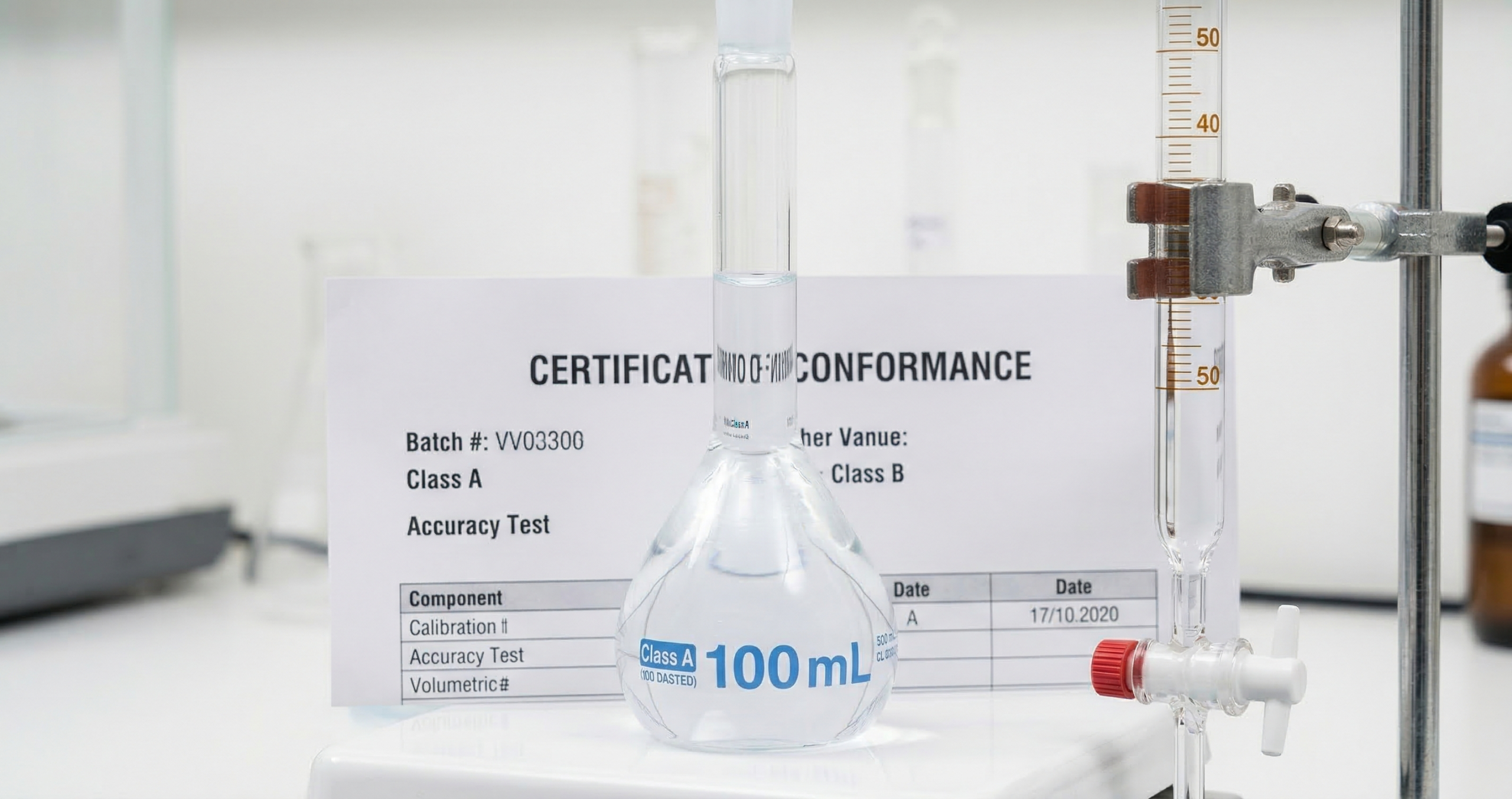
Precision in scientific glassware refers to how closely a piece of glassware delivers or contains the volume stated on its calibration mark, across repeated measurements. It is defined by the tolerance – the maximum permissible error between the nominal volume and the actual volume – as specified in international standards such as ISO 1042 for volumetric flasks, ISO 385 for burettes, and ISO 648 for pipettes.
Precision must be distinguished from accuracy. Accuracy describes how close a measurement is to the true value. Precision describes how consistently the same result is produced. Precision scientific glassware is designed to minimize both random error (variation between measurements) and systematic error (consistent offset from the true value). Class A glassware achieves tolerances approximately half those of Class B, making it the standard for any application where measurement uncertainty must be demonstrably small.
The reference temperature for all volumetric calibrations is 20 degrees C. Using glassware at significantly different temperatures introduces a predictable volume error due to thermal expansion of both the glass and the liquid inside. Understanding this physical reality is part of working with precision scientific glassware correctly in daily laboratory practice.
1. Measurement Accuracy and Volumetric Tolerance
The most direct impact of precision scientific glassware is on measurement accuracy. A 100 mL Class A volumetric flask has a tolerance of plus or minus 0.10 mL – meaning the true volume may differ from 100 mL by no more than 0.10 mL, or 0.1%. A Class B flask of the same nominal volume carries double the tolerance at plus or minus 0.20 mL. In practice, every solution prepared using Class B equipment introduces a starting concentration error of up to 0.2%, which propagates through every subsequent calculation and dilution in the workflow.
For an analytical chemist preparing a 10 ppm standard solution, a 0.2% volume error translates directly into a 0.2% concentration error – potentially the difference between a passing and failing assay result when regulatory limits are tight. This is why pharmaceutical and environmental laboratories mandate Class A glassware for all critical measurements. The tolerance values in precision scientific glassware are not arbitrary specifications; they define the outer boundary of defensible measurement in regulated science.
Key Fact: A 100 mL Class A volumetric flask is guaranteed within plus or minus 0.10 mL. In a 1000 mL flask, Class A tolerance is plus or minus 0.30 mL versus Class B at plus or minus 0.60 mL – a difference that compounds across every serial dilution in a multi-step assay.
2. Calibration Traceability and Standards Compliance
True precision scientific glassware is not just manufactured to tight tolerances – it is verified against internationally recognized standards and supplied with documentation that forms a traceable chain from the glass in your hand back to national measurement institutes. Class A volumetric glassware certified to ISO 1042, ISO 385, and ISO 648 must be verified gravimetrically: filled with distilled water at exactly 20 degrees C, weighed on a precision balance, and the actual volume calculated from the known density of water at that temperature.
This process, described in ISO 4787 (Methods for use and testing of capacity), ensures that calibration data is produced by the same physical measurement technique used by NIST and NPL. When a batch certificate from a reputable precision scientific glassware manufacturer states “ISO 1042 Class A compliant,” that certificate carries legal and scientific weight in regulatory audits under FDA 21 CFR Part 211 and ISO/IEC 17025.
Laboratories operating without traceable documentation for their glassware face a fundamental problem: any result produced by that equipment is scientifically unverifiable. Investing in precision scientific glassware with full traceability is not a premium – it is the minimum standard for credible science.
3. Chemical Inertness and Material Quality
Precision in scientific glassware extends beyond volumetric tolerance to the chemical behavior of the glass material itself. Borosilicate glass 3.3, the industry standard for laboratory glassware, is classified as Hydrolytic Class 1 (HGB 1) per ISO 719 – meaning it releases a minimal quantity of alkali ions into solutions, even under sustained chemical exposure. This inertness is critical for trace analysis, biological assays, and any application where contamination from the vessel itself would compromise the result.
Cheaper soda-lime glass, which looks identical to borosilicate on the shelf, leaches sodium, calcium, and other ions into solutions over time. In trace metal analysis by ICP-MS, enzyme activity assays, or pH-sensitive biochemistry, these contaminants introduce systematic bias that cannot be corrected after the fact. Precision scientific glassware from a certified manufacturer always uses verified borosilicate 3.3 glass, and the material specification should appear on the product data sheet alongside volumetric tolerance data.
4. Regulatory and Pharmacopoeial Compliance
Pharmaceutical, environmental, and food safety laboratories operate under regulatory frameworks that explicitly specify the grade of precision scientific glassware required for official test procedures. The United States Pharmacopeia (USP), European Pharmacopoeia (EP), and British Pharmacopoeia (BP) all require Class A volumetric glassware for standard solution preparation and official assay procedures. The FDA CGMP regulations under 21 CFR Part 211 require that laboratory instruments and measuring equipment be of adequate accuracy and precision for their intended use – a requirement that Class A glassware satisfies by definition.
Environmental testing laboratories accredited to ISO/IEC 17025 must demonstrate metrological traceability for all measurement results, which requires that volumetric glassware be calibrated and certified. Using non-certified precision scientific glassware in these settings is not merely a quality shortcut – it is a compliance failure that can result in loss of accreditation, invalidated test reports, and significant legal liability. The regulatory cost of a single audit finding related to equipment qualification typically far exceeds the total cost of switching to a certified glassware supplier.
5. Experimental Reproducibility
Reproducibility – the ability to obtain the same result from the same procedure performed independently – is the cornerstone of scientific validity. Precision scientific glassware contributes directly to reproducibility by ensuring that the volumetric measurement step introduces the same small, bounded error every time. When two analysts in the same laboratory prepare the same standard solution using the same Class A volumetric flask, their starting concentrations will agree within 0.1%. When they use Class B flasks, that agreement degrades to 0.2% – and across multiple serial dilutions, the divergence compounds further.
In multi-site clinical trials or collaborative ring studies, where different laboratories must produce comparable results from identical protocols, the specification of precision scientific glassware is one of the first items standardized in the method documentation. A difference in glassware grade between participating laboratories introduces a systematic inter-laboratory bias that statistical analysis cannot correct after the experiment is complete.
6. Laboratory Safety
Precision in scientific glassware is not limited to volumetric accuracy – it also encompasses the structural integrity and mechanical quality of the glass itself. Properly manufactured borosilicate glassware undergoes annealing, a controlled slow-cooling process that relieves internal stresses in the glass. Glass that has not been properly annealed contains residual stress that can cause it to fracture spontaneously, particularly when exposed to temperature changes or mechanical pressure during normal laboratory use.
A piece of precision scientific glassware from a certified manufacturer also meets specifications for wall thickness uniformity, freedom from inclusions and bubbles, and joint tolerances where interchangeable glassware systems are used. These structural specifications protect laboratory staff from unexpected breakages that can result in cuts, chemical exposure, and fire hazards when flammable solvents are involved. The safety case for investing in certified precision scientific glassware is as strong as the analytical case.
7. The Compounding Cost of Imprecision
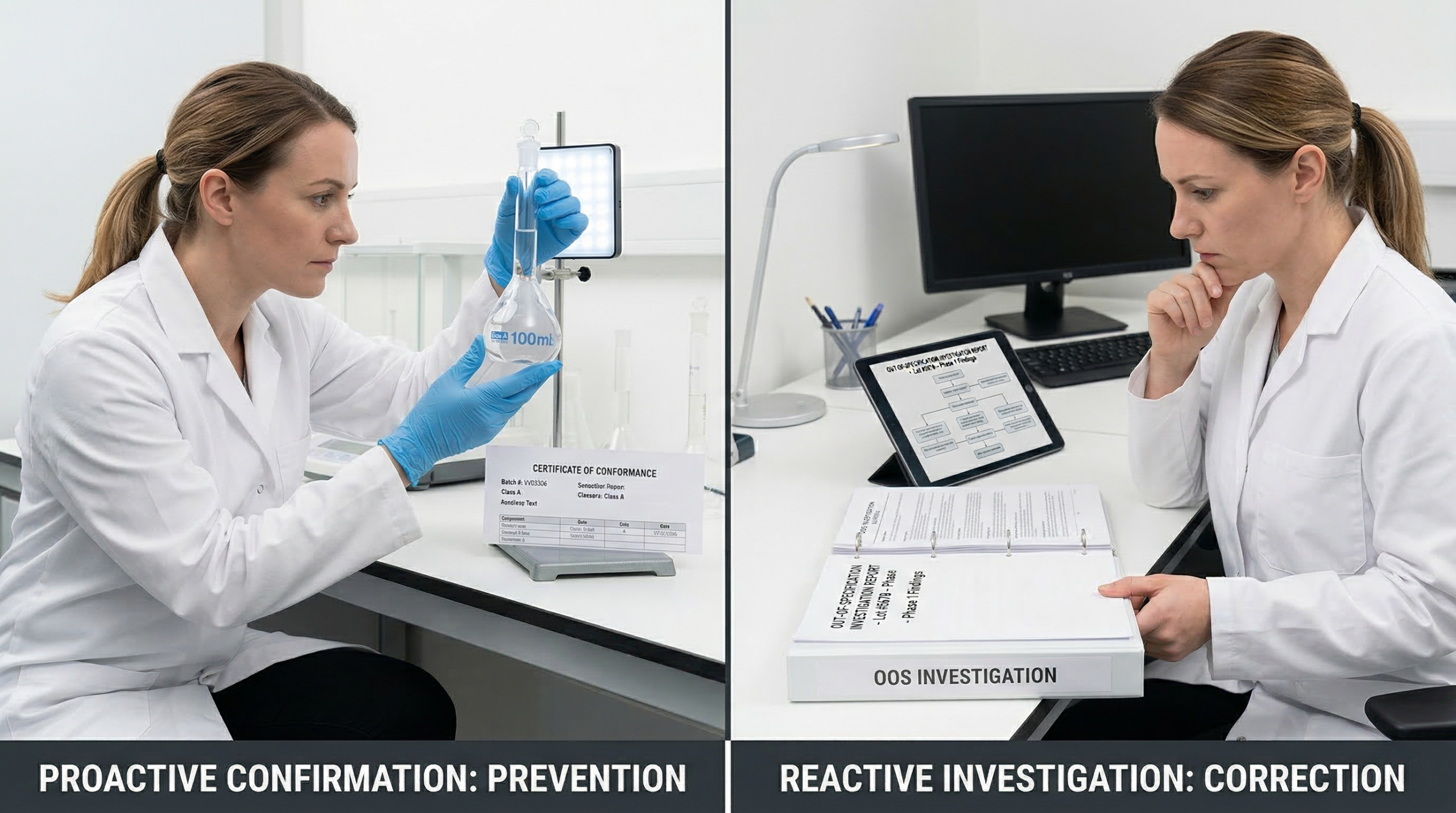
The financial argument for precision scientific glassware becomes clear when the true cost of imprecision is calculated. Consider a pharmaceutical QC laboratory that uses Class B glassware for standard solution preparation and produces results that trigger an out-of-specification investigation. The investigation, repeat testing, root cause analysis, regulatory notification, and potential batch rejection can cost tens of thousands of dollars – all traceable to a measurement error that Class A glassware would have prevented for a fraction of that cost.
In research, an experiment that produces irreproducible results due to volumetric imprecision must be repeated, wasting reagents, instrument time, and researcher effort. In environmental testing, an incorrect result can trigger unnecessary remediation or miss a contamination event – both outcomes with serious legal and public health consequences. The upfront cost of precision scientific glassware is always a smaller number than the downstream cost of the errors it prevents.
How to Ensure Precision in Your Scientific Glassware
Achieving the full benefit of precision scientific glassware requires more than purchasing Class A certified items. Proper use, storage, and maintenance are equally important. Volumetric glassware should never be heated in an oven, as heat permanently alters the calibrated volume. Glassware should be cleaned with validated laboratory detergents, rinsed thoroughly with deionized water, and air-dried inverted on a drying rack. Never blow compressed air into the neck of a flask or pipette, as this can deposit particulates onto the calibrated glass surface.
Inspect every piece of precision scientific glassware before use. Star cracks, chips on the rim, etched or faded graduation marks, and cloudy inner surfaces are all grounds for immediate retirement of the item. A volumetric flask with a chipped stopper seal cannot maintain the calibrated meniscus position, rendering its nominal volume unreliable. Document glassware retirement in a laboratory equipment log to maintain quality system records. For a full protocol, review our guide on laboratory glassware maintenance and cleaning tips.
When sourcing precision scientific glassware, always request batch certificates of conformance and verify that the standard cited matches your regulatory requirements. ISO 1042 for volumetric flasks, ISO 385 for burettes, ISO 648 for pipettes, and ASTM E288 for North American markets are the primary references. A supplier who cannot provide these documents on request should be removed from your approved vendor list. See our complete guide on how to choose a laboratory glassware manufacturer for a full supplier evaluation framework.
Frequently Asked Questions
Accuracy refers to how close a measurement is to the true value. Precision refers to how consistently the same result is produced across repeated measurements. Precision scientific glassware is designed to minimize both types of error: tolerance specifications limit systematic offset from the true volume, while consistent manufacturing controls minimize variability between individual pieces. Class A glassware achieves both goals to a higher standard than Class B, making it the correct choice for regulated analytical work.
Pharmacopoeial standards including USP, EP, and BP require that standard solutions used in official assays be prepared using Class A volumetric glassware. This requirement exists because the concentration accuracy of a standard solution directly determines every analytical result calculated from it. Precision scientific glassware at Class A grade is the only commercially available option that guarantees tolerances tight enough to meet pharmacopoeial method validation requirements. Using Class B in this context is a regulatory non-compliance, not just a quality preference.
Precision in scientific glassware is verified gravimetrically, following the procedure described in ISO 4787. Each piece is filled with distilled water at exactly 20 degrees C and weighed on a calibrated precision balance. Since the density of water at 20 degrees C is precisely known (0.99820 g/mL), the actual volume can be calculated and compared to the nominal value. Statistical sampling plans ensure that the entire production batch falls within the specified Class A or Class B tolerance before shipment. This gravimetric method is the global standard accepted by all major pharmacopoeias and accreditation bodies.
Yes, significantly. Borosilicate glass 3.3 has a low, uniform thermal expansion coefficient (3.3 x 10 to the power of -6 per K), which means its physical dimensions remain stable across the temperature range encountered in normal laboratory use. Soda-lime glass has a higher and less uniform expansion coefficient, making its calibrated volumes less reliable across temperature variations. Beyond thermal behavior, the chemical inertness of borosilicate glass prevents surface etching from reagents that can physically alter graduation lines over time. Precision scientific glassware manufactured from borosilicate 3.3 maintains its calibrated performance throughout a much longer service life than glassware made from inferior glass types.
Medilab Exports Consortium manufactures and exports ISO-certified precision scientific glassware to distributors and laboratories in over 40 countries. Our complete range includes Class A and Class B volumetric flasks, burettes, pipettes, graduated cylinders, and the full range of laboratory glassware. All Class A items are supplied with batch certificates of conformance. Individual calibration certificates are available on request for metrology-grade applications. Contact us for pricing, specifications, and bulk supply arrangements.
Source ISO-Certified Precision Scientific Glassware
Medilab Exports Consortium manufactures Class A and Class B precision scientific glassware for global distributors. Full batch documentation included. Serving pharmaceutical, environmental, and research labs in 40+ countries.
